
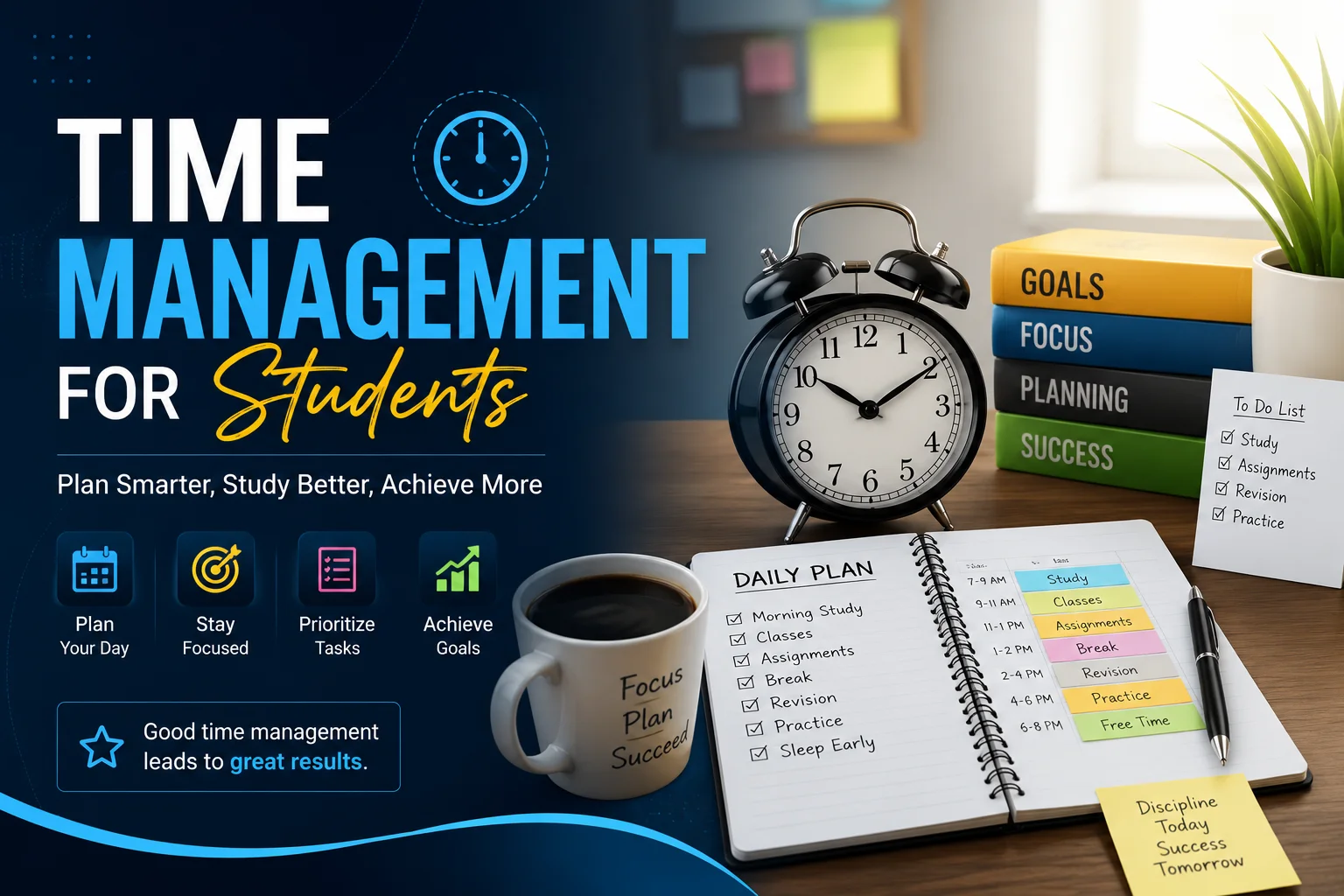
Time Management for Students: Simple Strategies for Academic Success
Managing time effectively is one of the most important skills for students. With assignments, exams, research projects, presentations, and personal responsibilities competing for attention, it can be difficult to stay organized. Good time management helps students reduce stress, improve productivity, and make consistent progress toward their academic goals.
Why Time Management Matters
Time management is not simply about working for longer hours. It is about using available time wisely and giving the right amount of attention to each task.
Students who manage their schedules effectively can avoid last-minute pressure, complete assignments on time, and create a healthier balance between academic and personal activities.
1. Create a Weekly Study Plan
Start each week by listing your important tasks. Include assignments, deadlines, exams, research work, and other commitments.
Once everything is written down, divide larger projects into smaller tasks. Instead of planning to “complete an assignment,” for example, you can break it into research, outline, first draft, editing, referencing, and final review.
This makes large projects feel more manageable.
2. Prioritize Important Tasks
Not every task has the same level of urgency. A useful approach is to identify tasks that are both important and time-sensitive.
Try completing high-priority academic work first, especially when a deadline is approaching. Smaller tasks can then be handled during the remaining time.
3. Avoid Multitasking
Multitasking may seem productive, but constantly switching between tasks can make it harder to concentrate.
When studying, focus on one activity at a time. Put your phone away, close unnecessary browser tabs, and give yourself a specific period for focused work.
Even 30–45 minutes of uninterrupted concentration can be highly productive.
4. Use Short Study Sessions
Long study sessions are not always the most effective. Consider working in focused sessions followed by short breaks.
For example, you could study for 40 minutes and then take a 10-minute break. During the break, step away from your screen, stretch, drink water, or simply relax.
Regular breaks can help maintain concentration throughout the day.
5. Start Assignments Early
One of the easiest ways to reduce academic stress is to avoid waiting until the last day.
Starting early gives you enough time to research your topic, organize your ideas, review your work, correct mistakes, and improve the final result.
Early preparation is particularly important for research papers, dissertations, presentations, and technical projects.
6. Set Realistic Goals
Your study plan should be realistic. Trying to complete too many tasks in a single day can lead to frustration.
Set a few achievable goals and track your progress. Completing smaller goals consistently is often more effective than creating an unrealistic schedule that is difficult to follow.
Conclusion
Effective time management can make student life more organized and less stressful. By creating a weekly plan, prioritizing important tasks, avoiding distractions, taking regular breaks, and starting projects early, students can improve both productivity and academic performance.
The goal is not to stay busy every minute of the day. The goal is to use your time intentionally so that you can study effectively while still having time to rest and enjoy other aspects of life.